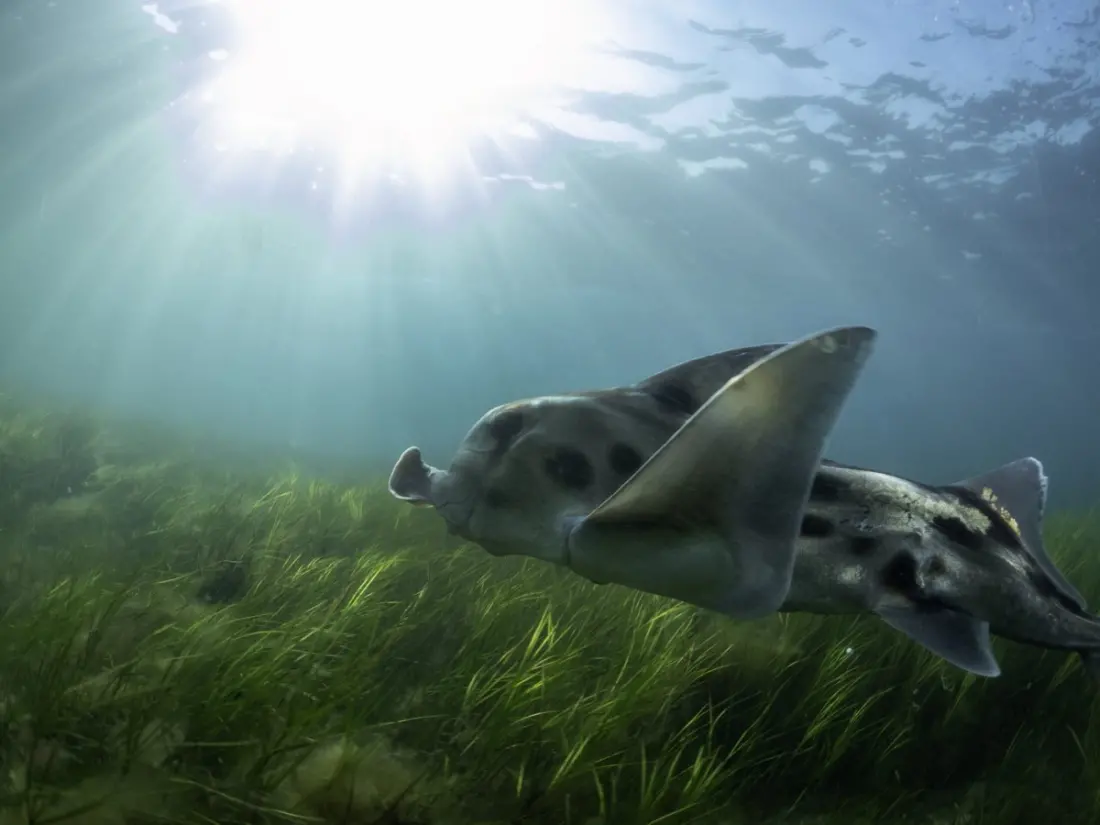
Just an hour from Melbourne, one of the ocean's strangest creatures arrives every autumn to breed. The Australian ghost shark — or elephant fish — migrates into the shallow waters of Western Port Bay each March to May, where females lay two large, leathery egg cases every few weeks. Those tough collagen capsules, fringed like something out of an Alien film, sit on the seafloor for six to eight months before self-sufficient hatchlings emerge.
Ghost sharks aren't technically sharks. They're chimaeras, a lineage that split from sharks more than 400 million years ago — making them as distantly related to sharks as sharks are to humans. Around 60 species survive, most living in deep water where research is nearly impossible. The Australian ghost shark is a rare exception: it breeds in accessible bays along Australia's southern coast, including Tasmania, and around New Zealand. Its silvery skin shimmers in dark water, and a shovel-shaped snout packed with electroreceptors works like a fleshy metal detector for finding prey. Males sport perhaps the oddest feature of all — a retractable, tooth-covered rod on the forehead used to grip the female during mating.
Monash University's Currie Lab in Melbourne is one of the few places in the world studying these animals, and its proximity to Western Port Bay is the key. Local fishers and an aquaculture facility in Rosebud on the Mornington Peninsula supply gravid females, which are released back to the wild after laying. The eggs then give scientists a rare window into embryonic development — including how the bizarre forehead appendage first appears in embryos of both sexes before only males keep it.
There's a conservation angle worth knowing before you visit. Western Port Bay has lost significant seagrass due to sediment and nutrient pollution from its catchment, and sightings of ghost sharks and other seasonal visitors have dropped. The species itself is listed as Least Concern — it isn't commercially targeted and recreational catches are quota-protected — but the health of its nursery bay matters for the wider ecosystem. Researchers say preserving these southern Australian habitats is essential precisely because they offer science one of its only chances to study chimaeras up close.
For travellers, this is a good excuse to look past Phillip Island's penguins and pay attention to the bay between them and the mainland. Western Port is a Ramsar-listed wetland with seagrass beds, mangroves and rich birdlife, and the Mornington Peninsula makes an easy coastal escape from Melbourne. You're unlikely to spot a ghost shark — they're elusive even for scientists — but autumn visits coincide with the breeding season, local fishing charters know the waters, and simply understanding that this unassuming bay is one of the planet's few known chimaera nurseries changes how you see the place. Responsible tourism that supports seagrass and water-quality efforts here has a direct payoff for a creature that's barely changed in 400 million years.